The basics
Discovering sports food supplements
An introduction to sports food supplements and the essential concepts that help explain the subject.
Read the articleTHE ESSENTIALS · FOOD, INGREDIENTS & TRAINING
What is in a protein powder? How do BCAAs differ from a whole protein? What does a serving on a label actually mean? Start with the ingredients, then learn how to compare the information around them.
This guide explains the main families of sports supplements and gives you a practical method for reading labels. The focus is on clear definitions, food context and useful comparisons, rather than a list of products to buy.
A useful starting question
“Am I comparing a nutrient, a raw material or a finished product?” The answer changes what the numbers on the label can tell you.

THE STARTING POINT
Food first. Details next.
Understand the category before comparing the container.
01 / WHAT A SUPPLEMENT IS
The word supplement describes a product intended to complement ordinary food intake. A sports label adds a context, but it does not tell you the full composition or make every item in that range the same kind of product.
A nutrient is a constituent of food, such as protein, a vitamin or a mineral. Its name describes a nutritional category. It does not specify a brand, flavour, serving size or finished formulation.
An ingredient identifies what goes into a product. Whey protein, pea protein and an added flavouring describe different components of a formulation. Start with the complete list before relying on a short front-of-pack name.
Powder, capsule, tablet and liquid describe presentation. The same format can contain very different ingredients. Two powders are only meaningfully comparable once their contents and reference quantities are clear.
Practical reading tip: write these three headings on a page and place each unfamiliar term underneath the heading it belongs to. This separates the question “What is it?” from “How is it presented?” before you start comparing quantities.
02 / FOOD CONTEXT
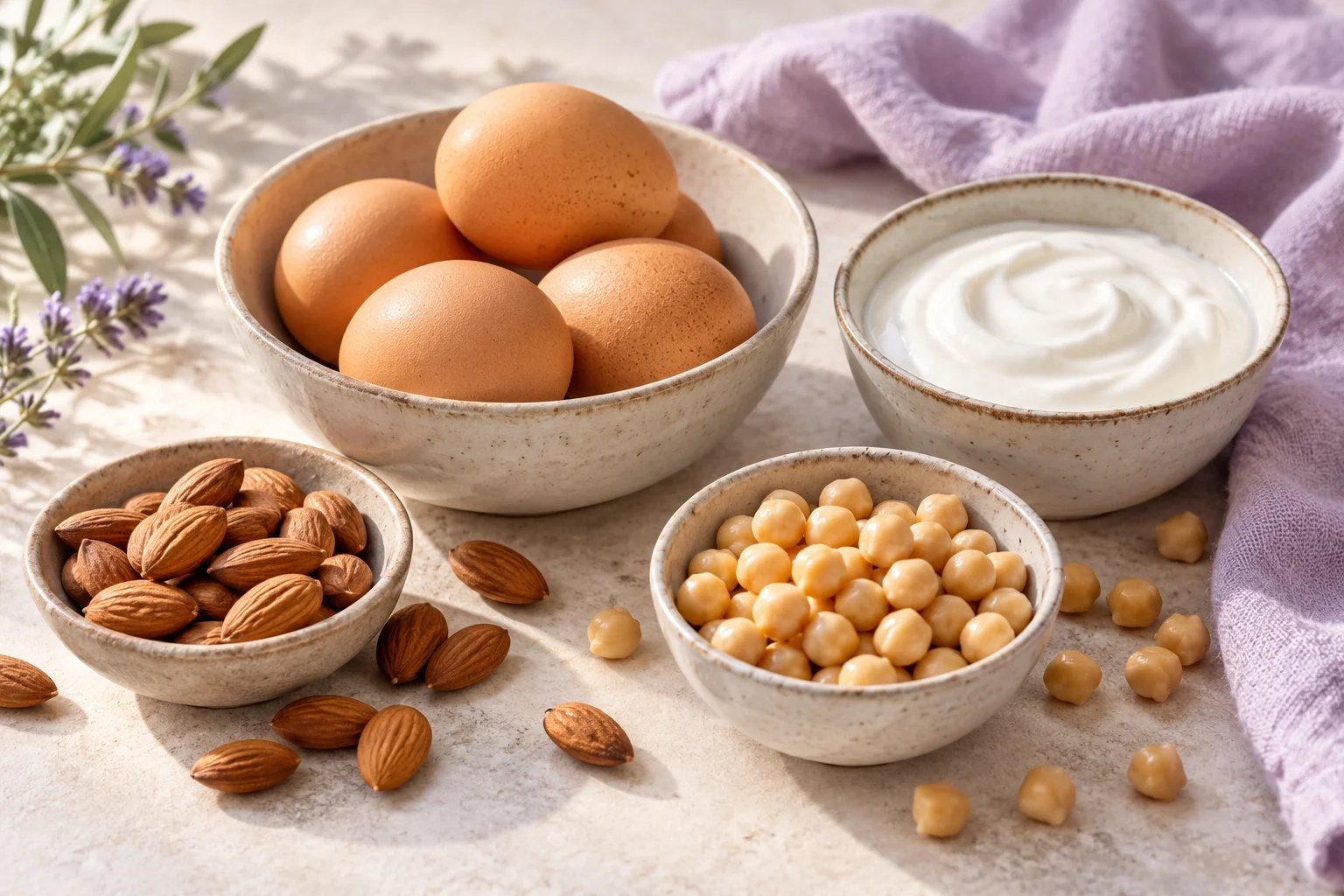
Protein, carbohydrates, vitamins and minerals already occur in everyday foods. A supplement label describes a concentrated product; it does not describe everything eaten over a day. Keep those two scales separate when reading about sports nutrition.
For example, a yoghurt and a protein powder can both contain protein, while differing in water content, ingredients, texture and the other nutrients they provide. Comparing only one number leaves out much of that context.

03 / PROTEIN POWDERS
Protein powders are often described by their raw material and processing terms. Those names are useful starting points, but the nutrition table and ingredient list explain the finished product in more detail.
Whey and casein are protein sources associated with milk. A source name helps you identify the raw material; it does not tell you the exact protein percentage or every additional ingredient. Read the allergen information as a separate part of the label.
Pea, soya and rice are examples of raw materials used in plant protein powders. A blend can combine more than one source. Look for the named ingredients and any stated proportions instead of assuming that every plant blend has the same composition.
These words describe aspects of a processed raw material. They do not replace the numerical information on a label. Compare the stated protein content on an equal basis and distinguish the weight of powder from the amount of protein it contains.
If a hypothetical 30 g serving of powder lists 24 g of protein, the two numbers describe different things. The serving is the weight of the whole product; the protein figure is one component within it. This is a label-reading example, not a suggested serving.
04 / AMINO ACIDS
Proteins are made from chains of amino acids. BCAA is the collective abbreviation for three of them: leucine, isoleucine and valine. A product containing these three amino acids is therefore described differently from a whole protein.
“Essential” and “branched-chain” are also different descriptions. Essential concerns the need for a dietary supply; branched-chain refers to structure. All three BCAAs are essential amino acids, but the full group of essential amino acids is larger.
05 / OTHER COMMON FAMILIES
Avoid treating every sports product as another version of a protein powder. A category name can refer to a different substance, a different role in the formulation or a mixture of several groups.
Creatine is a compound involved in the muscle energy system. It is not a protein or a BCAA blend. When reading a description, separate the named substance from any additional ingredients and from the broader claims made for the range.
These are distinct nutrient families, often listed with different units and reference percentages. A percentage beside one nutrient is not directly interchangeable with a percentage beside another. Read the nutrient name, quantity and unit together.
A blend may contain several categories of ingredients. A broad range name does not explain each component. Follow the list through, identify the named substances and note which quantities are stated individually and which are only stated for a blend.
Practical comparison tip: give each ingredient its own row. Add columns for its name, the quantity stated and the unit used. Leave a cell blank when the information is not supplied rather than replacing the gap with an assumption.
06 / A LABEL-READING METHOD
A second pass through the same label is often more useful than switching between several product pages. Start by making one presentation understandable, then use the same headings for the next.

07 / COMPARING QUANTITIES
The examples below are fictional calculations to explain a nutrition table. They are not product recommendations or suggested amounts to consume.
| Label information | Example A | Example B |
|---|---|---|
| Stated powder serving | 30 g | 40 g |
| Protein in that serving | 24 g | 28 g |
| Protein per 100 g of powder | 80 g | 70 g |
Example B lists more protein in its stated serving, but that serving also contains more powder. Comparing 24 g with 28 g alone combines a composition difference with a serving-size difference.
The per-100-g figures describe the same amount of product. The calculation is protein per serving divided by serving weight, multiplied by 100. This explains the table without ranking the products as a whole.

08 / A PRACTICAL READING HABIT
When a new term appears, write down its definition and one example. Then note whether it describes a nutrient, an ingredient, a process or a format. This turns an unfamiliar label into a series of smaller questions.
Keep training language separate from composition language. Words such as “recovery”, “strength” or “energy” can describe a theme in a product range, while the ingredient list answers a different question. Return to what is actually named and quantified.
09 / COMMON MISREADINGS
A larger scoop may contain a larger amount of protein simply because it contains more product. Use a common reference quantity to understand concentration, then return to the rest of the composition.
A short name leaves out part of the formulation. The ingredient list, quantities, units, allergens and preparation directions each add a different piece of information. Read them as connected parts of one description.
Two products can share an ingredient while differing in other components or proportions. Identify what is actually the same and what has not been stated. Similar terminology does not make every detail equivalent.
The practical aim is a clearer question, not an instant verdict. Once you can describe a difference precisely, you can decide what information you still need instead of asking one headline to explain the whole product.
10 / QUESTIONS THAT CLARIFY THE DETAILS
Protein is a nutrient found in food. A protein powder is a finished product containing protein and potentially other ingredients. Keep the nutrient, its raw material source and the complete formulation separate when reading a label.
No. Proteins consist of chains of amino acids. BCAAs are the particular group of leucine, isoleucine and valine. A preparation containing only those three amino acids is not described in the same way as a whole protein.
The serving figure describes the amount in the manufacturer’s stated portion. The per-100-g figure describes a shared reference quantity. If two serving sizes differ, compare on the same basis before interpreting the numbers.
A ratio describes relative proportions between specified components. It does not provide a total quantity on its own or explain every other ingredient. Read the ratio alongside the amount of product and the full ingredient list.
No. Powder, capsule and liquid describe presentation. Different nutrient or ingredient families can share a format, and one family can appear in several formats. Classify by composition first and presentation second.
The definitions and ingredient explanations draw on the following institutional material. The comparison table above is an original arithmetic illustration.
11 / CONTINUE EXPLORING
The guide above introduces the main distinctions. These six articles explore the same subjects in more detail, from the meaning of a supplement to the relationship between proteins and amino acids.
The basics
An introduction to sports food supplements and the essential concepts that help explain the subject.
Read the articleThe basics
An overview of their place in sports nutrition and the distinctions that help explain them.
Read the articleThe basics
Accessible reference points for people discovering sports food supplements.
Read the articleCategories
An introduction to the main categories of sports supplements and the differences between them.
Read the articleProteins and amino acids
Explore protein supplements, their main forms and their characteristics.
Read the articleProteins and amino acids
An introduction to BCAAs, their presence in food and their place among amino acids.
Read the article